算法奇妙屋(六)-哈希表

算法奇妙屋(六)-哈希表

景画
发布于 2025-12-19 12:42:10
发布于 2025-12-19 12:42:10
一. 力扣 1. 两数之和
1. 题目
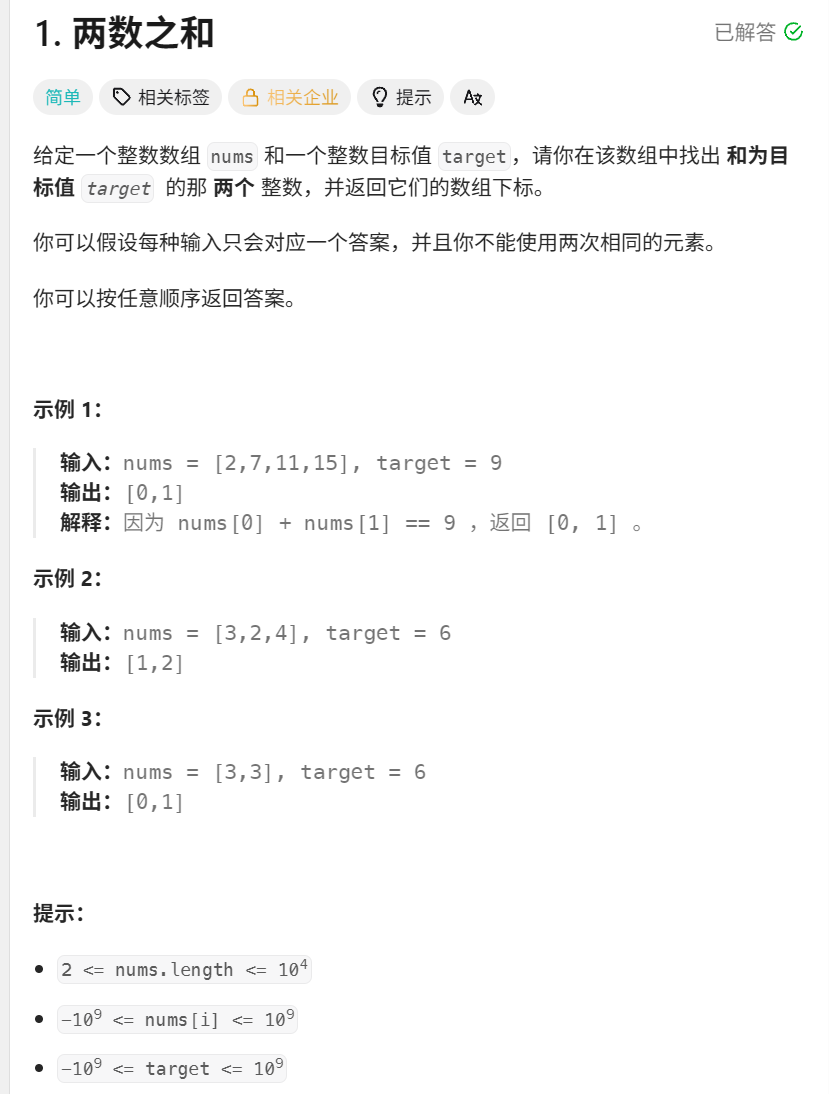
提议十分简单,即求两数之和等于目标值的下标,并且下标不能出现两次
2. 算法原理
(1) 暴力解法1, 2:
1: 固定一个数,向后找 2: 固定一个数,向前找

在这里插入图片描述
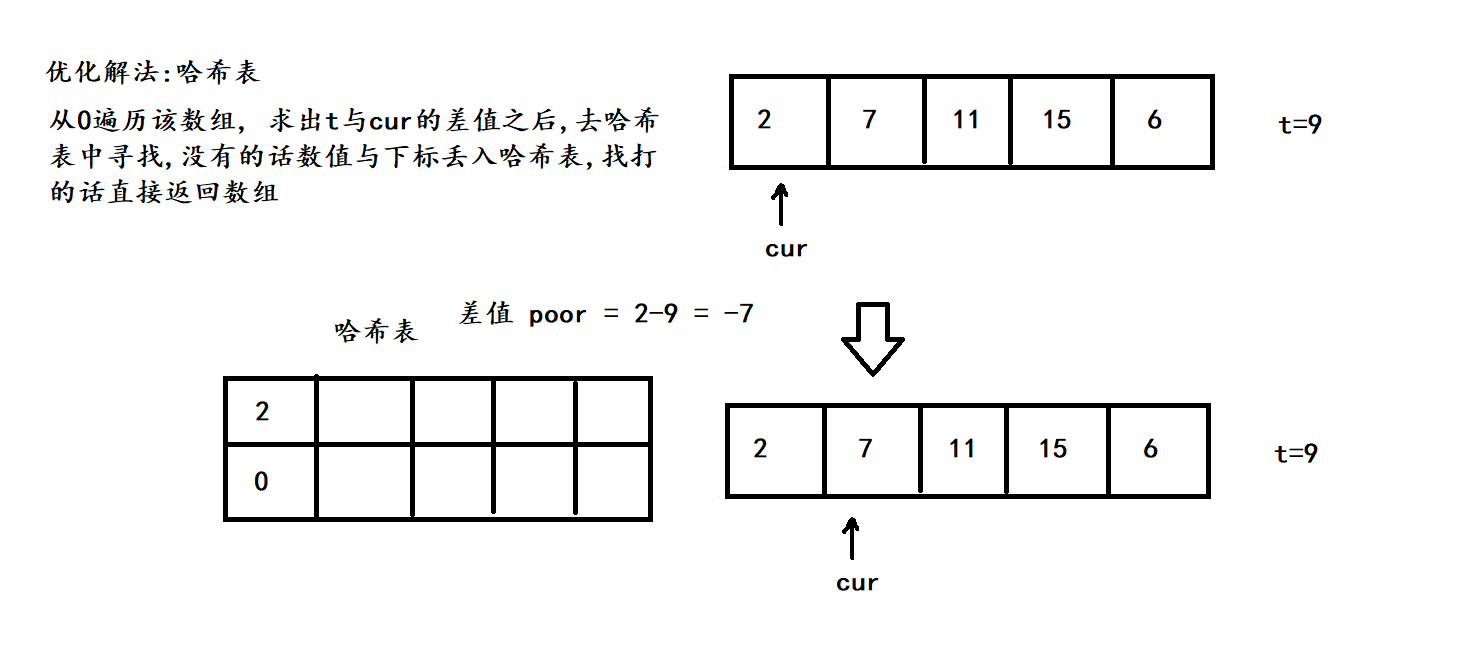
(2) 哈希解法:
3. 代码
(1) 暴力解法1, 2:
// 暴力解法 1
    public int[] twoSum(int[] nums, int target) {
        int n = nums.length;
        int[] ret = new int[2];
        for (int i = 0; i < n; i++) {
            for (int j = i + 1; j < n; j++) {
                if (nums[i] + nums[j] == target) {
                    ret[0] = i;
                    ret[1] = j;
                    return ret;
                }
            }
        }
        return null;
}// 暴力解法 2
public int[] twoSum(int[] nums, int target) {
int n = nums.length;
int[] ret = new int[2];
for (int i = 1; i < n; i++) {
for (int j = i - 1; j >= 0; j--) {
if (nums[i] + nums[j] == target) {
ret[0] = i;
ret[1] = j;
return ret;
}
}
}
return null;
}(2) 哈希解法:
    public int[] twoSum(int[] nums, int target) {
        int[] ret = new int[2];
        Map<Integer,Integer> hash = new HashMap<>();
        for (int i = 0; i < nums.length; i++) {
            int pool = target - nums[i];
            int index = hash.getOrDefault(pool,-1);
            if ( index != -1) {
                ret[0] = index;
                ret[1] = i;
                return ret;
            }
            hash.put(nums[i], i);
        }
        return null;
    }
二. 力扣 面试题 01.02. 判定是否互为字符重排
1. 题目
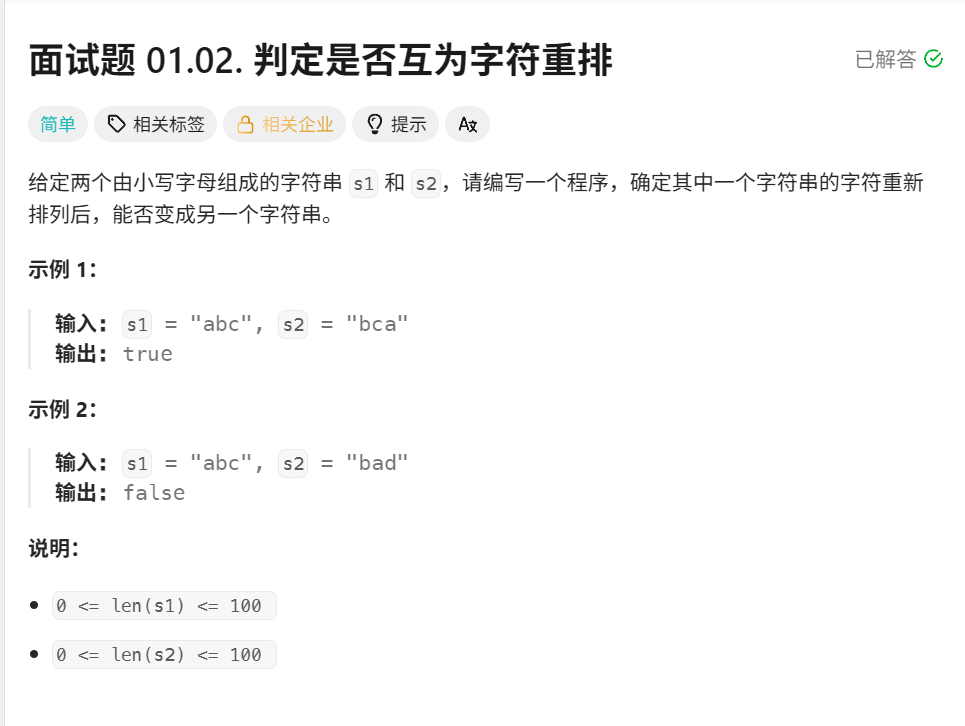
这道题比较简单, 具体看题意即可
在这里插入图片描述
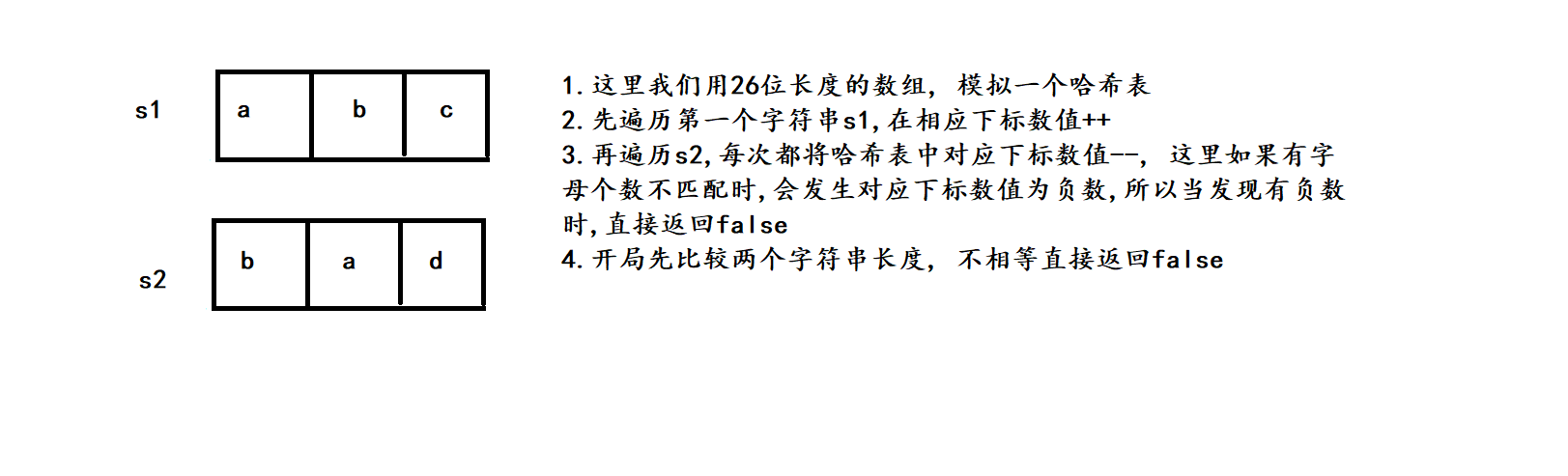
2. 算法原理
在这里插入图片描述
3. 代码
    public boolean CheckPermutation(String s1, String s2) {
        if (s1.length() != s2.length()) {
            return false;
        }
        int n = s1.length();
        int[] hash = new int[26];
        for (int i = 0; i < n; i++) {
            hash[s1.charAt(i) - 'a']++;
        }
        for (int i = 0; i < n; i++) {
            hash[s2.charAt(i) - 'a']--;
            if ((hash[s2.charAt(i) - 'a']) < 0) {
                return false;
            }
        }
        return true;
    }
三. 力扣 217.存在重复元素
1. 题目
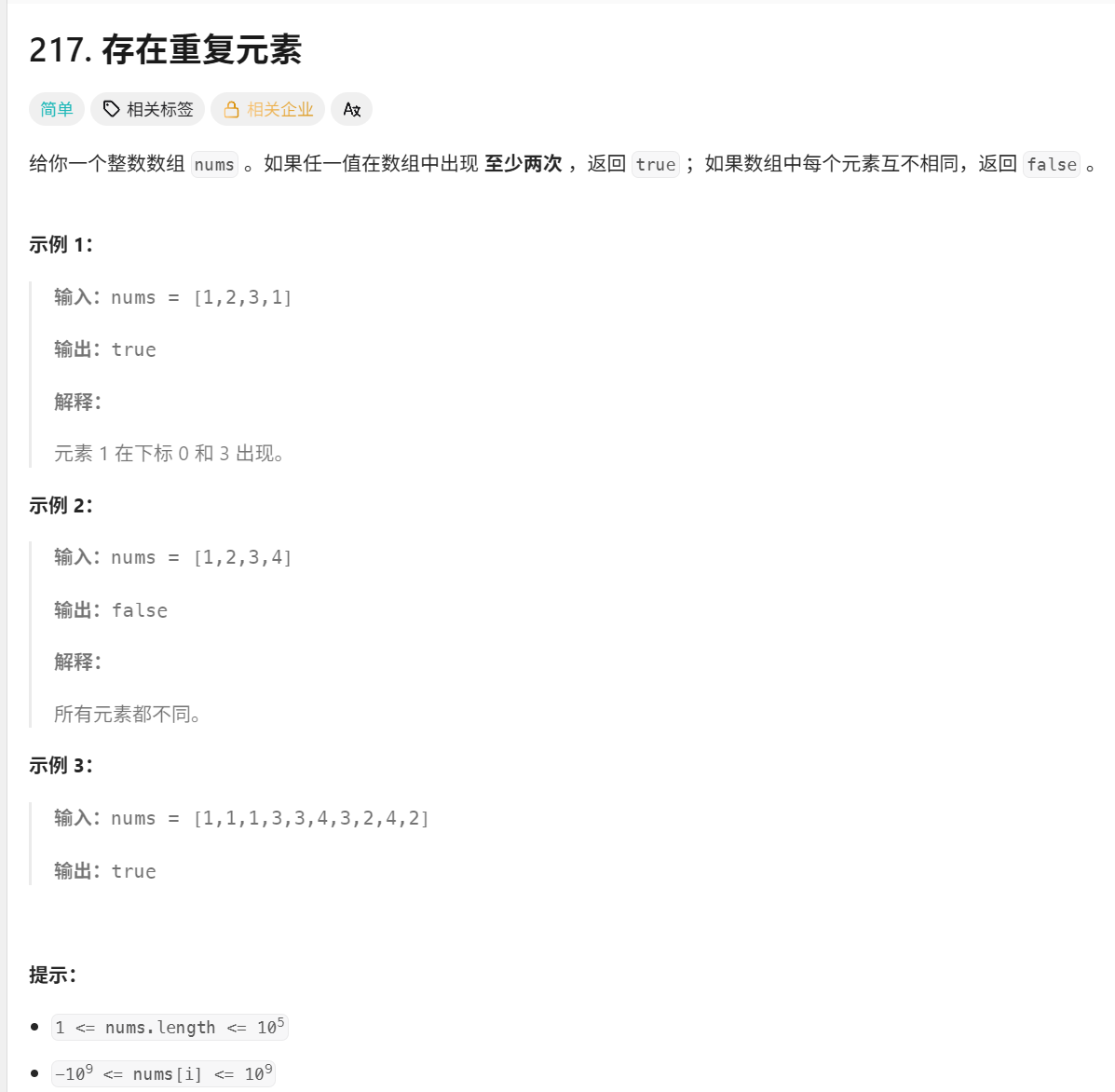
在这里插入图片描述
2. 算法原理
这里的算法原理十分简单, 用set模拟哈希表即可快速解决
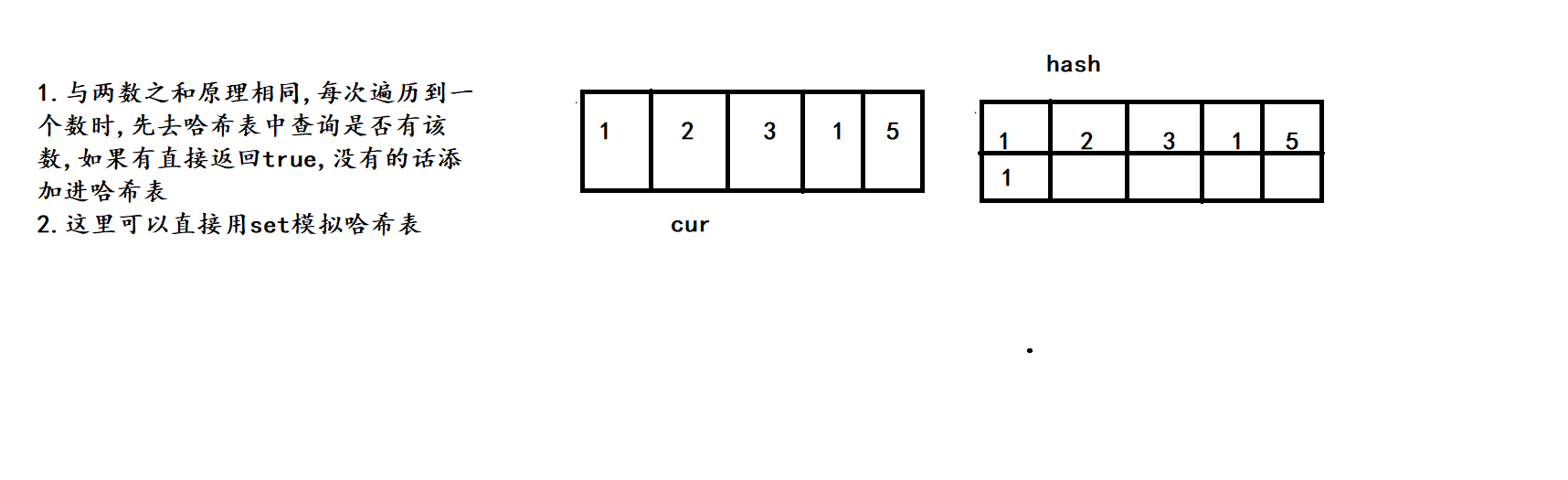
在这里插入图片描述
3. 代码
    public boolean containsDuplicate(int[] nums) {
        Set<Integer> hash = new HashSet<>();
        for (int i = 0; i < nums.length; i++) {
            if (hash.contains(nums[i])) {
                return true;
            }
            hash.add(nums[i]);
        }
        return false;
    }
四. 力扣 219. 存在重复元素 II
1. 题目
相比于上一道题只是增加了下标的差值<=k这个条件
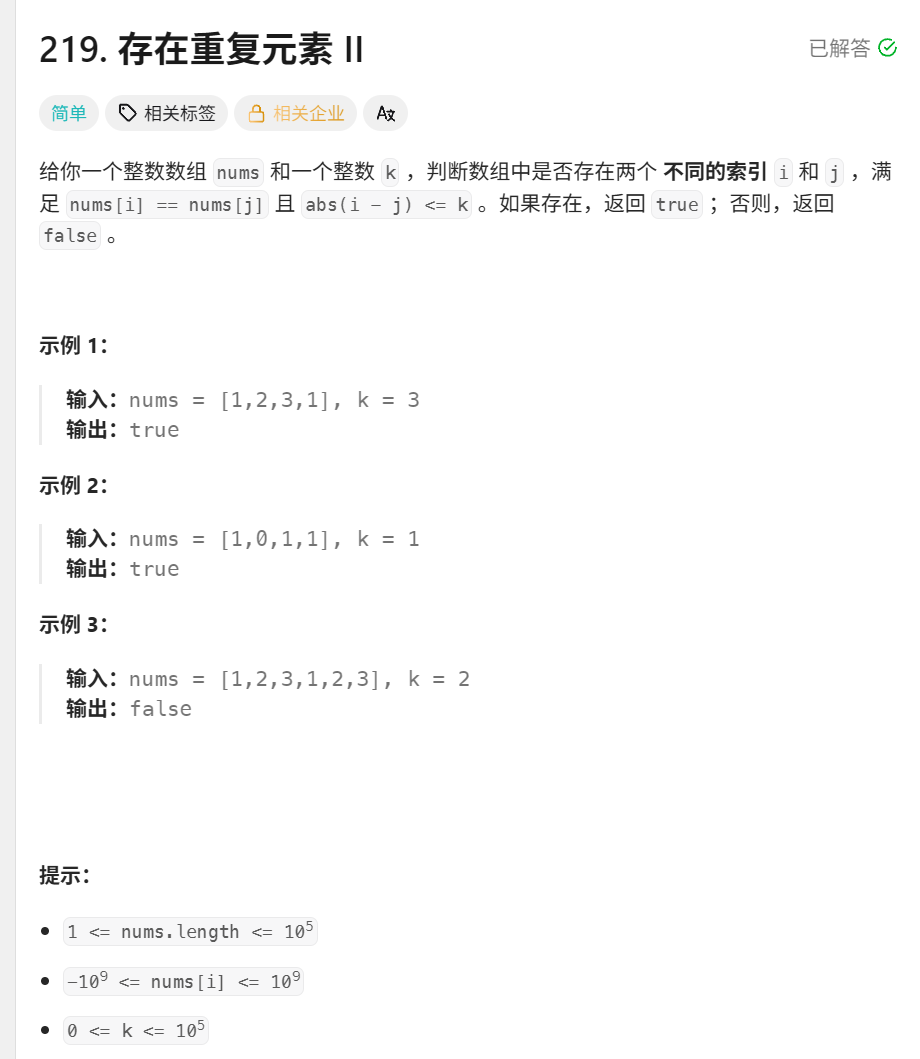
2. 算法原理
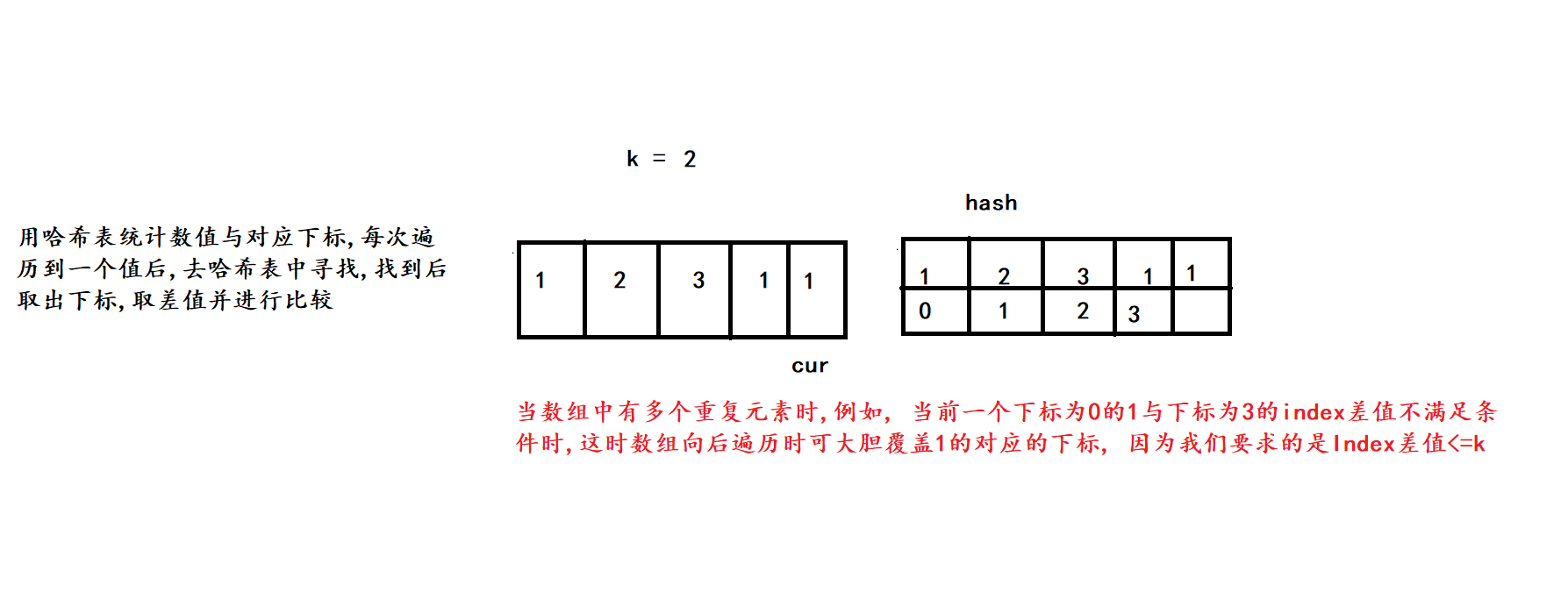
3. 代码
    public boolean containsNearbyDuplicate(int[] nums, int k) {
        Map<Integer,Integer> hash = new HashMap<>();
        for (int i = 0; i < nums.length; i++) {
            int index = hash.getOrDefault(nums[i], -1);
            if (index != -1 && Math.abs(i - index) <= k) {
                return true;
            }
            hash.put(nums[i], i);
        }
        return false;
    }
五. 力扣 49. 字母异位词分组
1. 题目
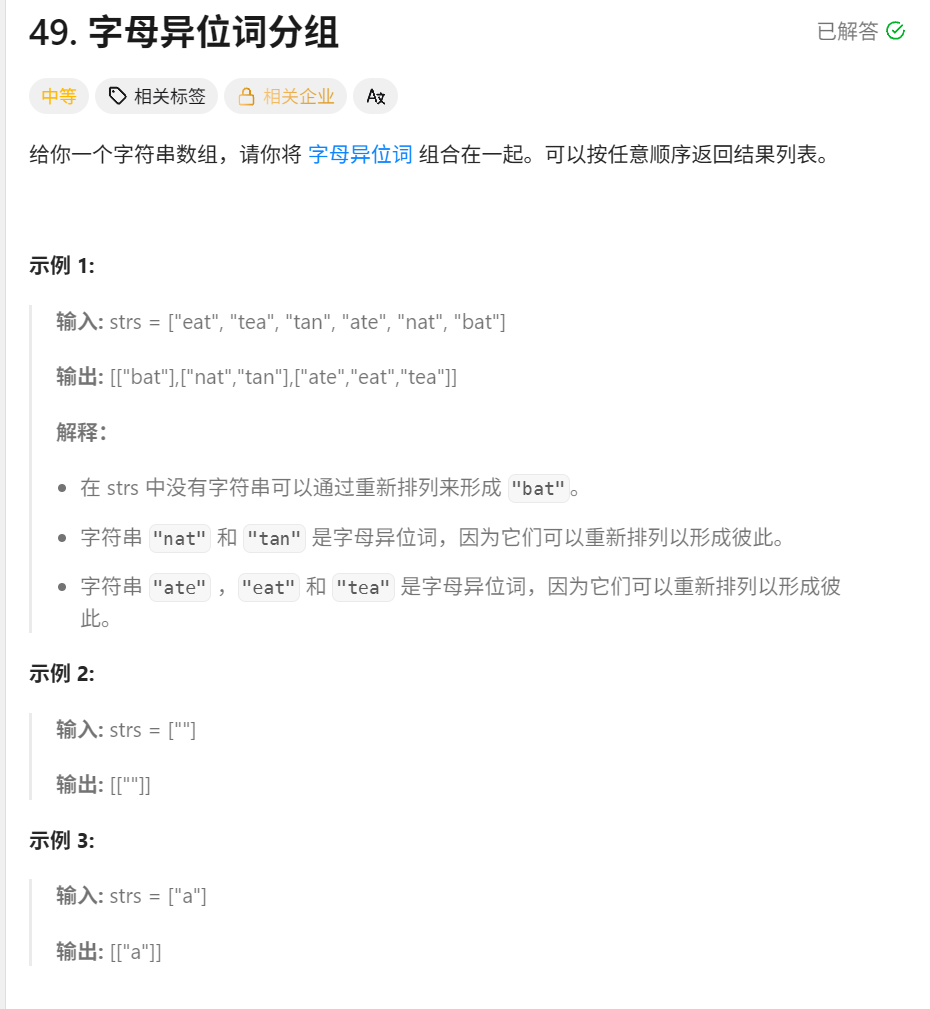
这道题有点像第二题的变种, 这里多了一步是将所有互为重排序的字符串放到一个集合
2. 算法原理
3. 代码
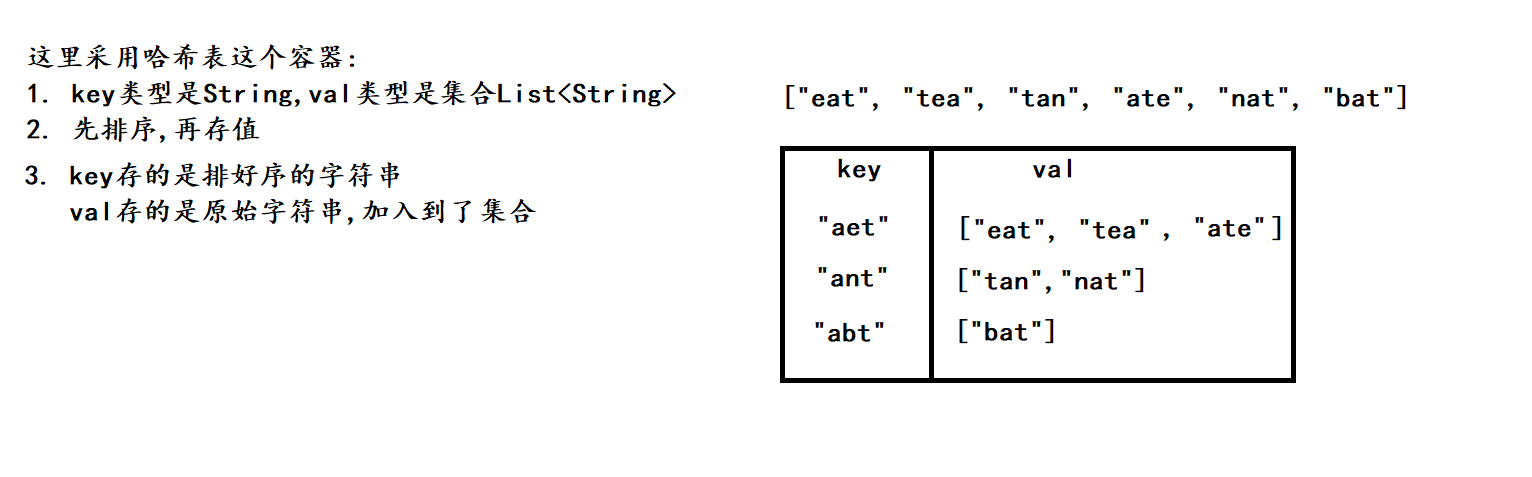
这里面需要注意的是, 排序后不可以直接使用toString将ch数组转为字符串, 这会导致字符串常量池无法存入, 导致值相同的字符串获取的的哈希地址不同, 会导致hash表中一个值对应多个val, 因为在哈希表中存入的string类型存的是哈希地址
    public List<List<String>> groupAnagrams(String[] strs) {
        List<List<String>> lists = new ArrayList<>();
        Map<String, List<String>> hash = new HashMap<>();
        for (String str : strs) {
            char[] ch = str.toCharArray();
            Arrays.sort(ch);
            String s = new String(ch);
            List<String> list = hash.getOrDefault(s, new ArrayList<>());
            list.add(str);
            hash.put(s,list);
        }
        return new ArrayList(hash.values());
    }
本文参与 腾讯云自媒体同步曝光计划,分享自作者个人站点/博客。
原始发表:2025-12-09,如有侵权请联系 cloudcommunity@tencent.com 删除
目录
腾讯云开发者

Copyright © 2013 - 2026 Tencent Cloud. All Rights Reserved. 腾讯云 版权所有
深圳市腾讯计算机系统有限公司 ICP备案/许可证号:粤B2-20090059  粤公网安备44030502008569号
腾讯云计算(北京)有限责任公司 京ICP证150476号 | 京ICP备11018762号