人工智能大模型的100个生信案例之提取基因名字


前面我们在:生信方向的博士找博士后机会不能只看ngs数据处理技术啊! 强调了,在人工智能大模型的加持下,普通入门级别生信工程师跟有三五年工作经验的没什么区别啦。接下来我们就使用人工智能大模型的100个生信案例告诉大家,希望大家能持续关注哦! 2017的一个文章:《Meta-signature of human endometrial receptivity: a meta- analysis and validation study of transcriptomic biomarkers》 做了很多独立的公共数据集里面的表达量矩阵分组后的差异分析,然后使用rra整合算法拿到了可靠的上下调基因,但是隐藏在下面的图里面:
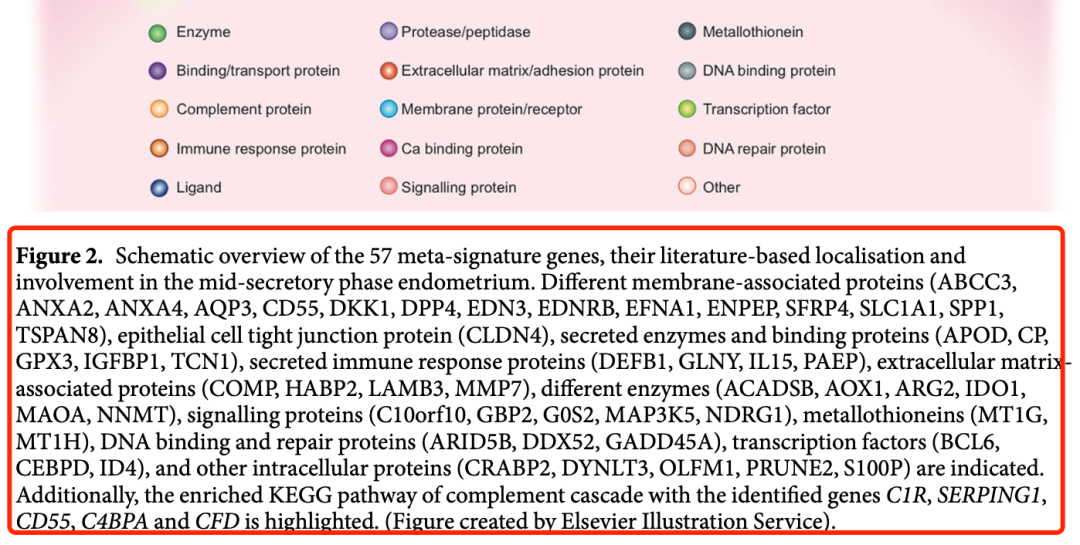
我的提问非常简单:
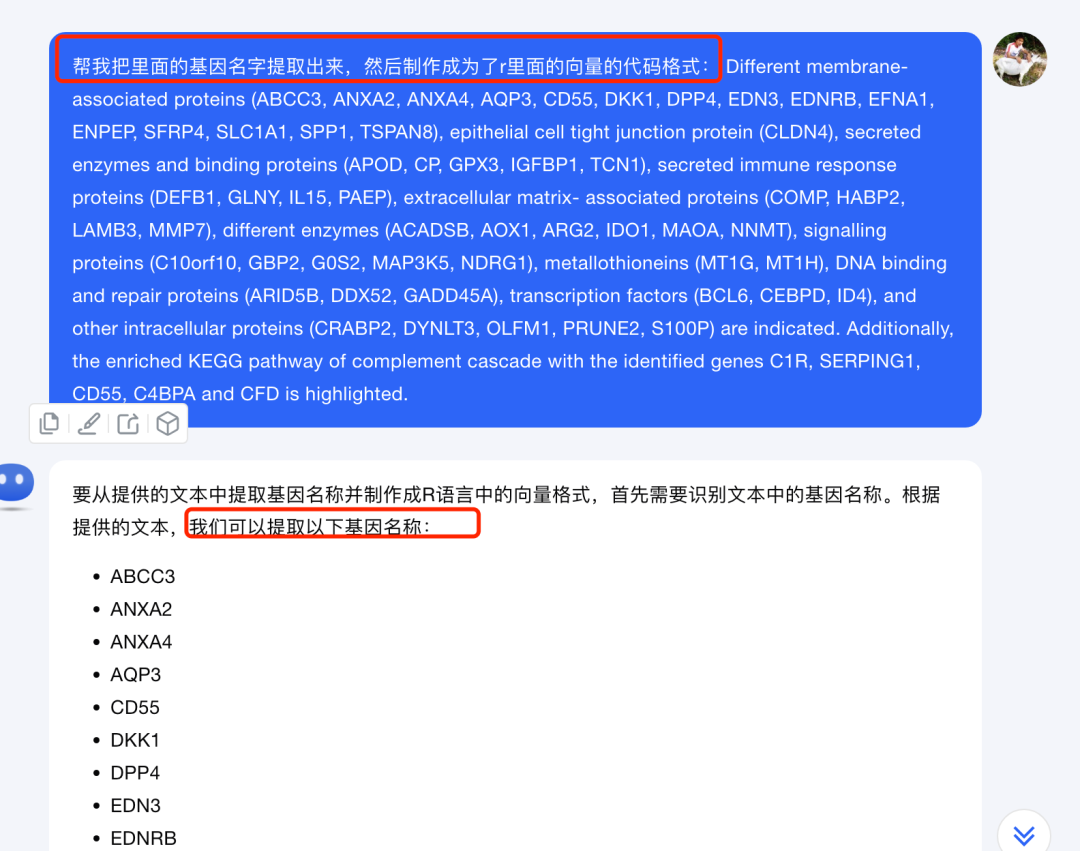
帮我把里面的基因名字提取出来,然后制作成为了r里面的向量的代码格式:Different membrane-associated proteins (ABCC3, ANXA2, ANXA4, AQP3, CD55, DKK1, DPP4, EDN3, EDNRB, EFNA1, ENPEP, SFRP4, SLC1A1, SPP1, TSPAN8), epithelial cell tight junction protein (CLDN4), secreted enzymes and binding proteins (APOD, CP, GPX3, IGFBP1, TCN1), secreted immune response proteins (DEFB1, GLNY, IL15, PAEP), extracellular matrix- associated proteins (COMP, HABP2, LAMB3, MMP7), different enzymes (ACADSB, AOX1, ARG2, IDO1, MAOA, NNMT), signalling proteins (C10orf10, GBP2, G0S2, MAP3K5, NDRG1), metallothioneins (MT1G, MT1H), DNA binding and repair proteins (ARID5B, DDX52, GADD45A), transcription factors (BCL6, CEBPD, ID4), and other intracellular proteins (CRABP2, DYNLT3, OLFM1, PRUNE2, S100P) are indicated. Additionally, the enriched KEGG pathway of complement cascade with the identified genes C1R, SERPING1, CD55, C4BPA and CFD is highlighted.
如下所示的对话:
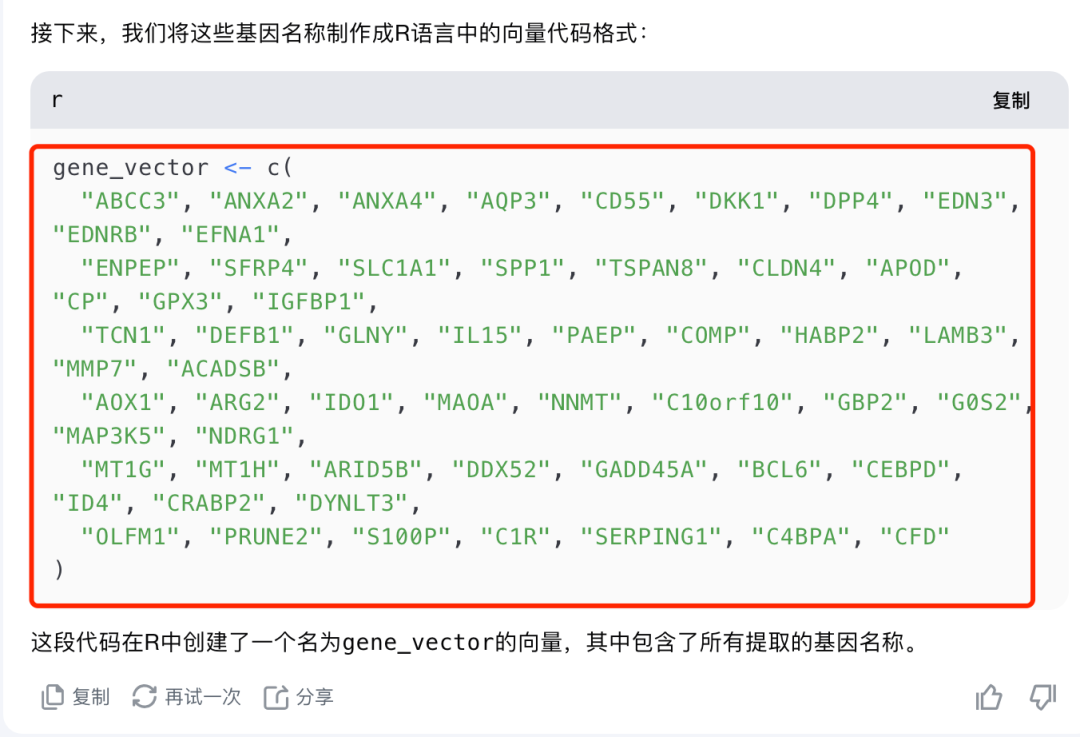
而且很容易就写出来了代码:
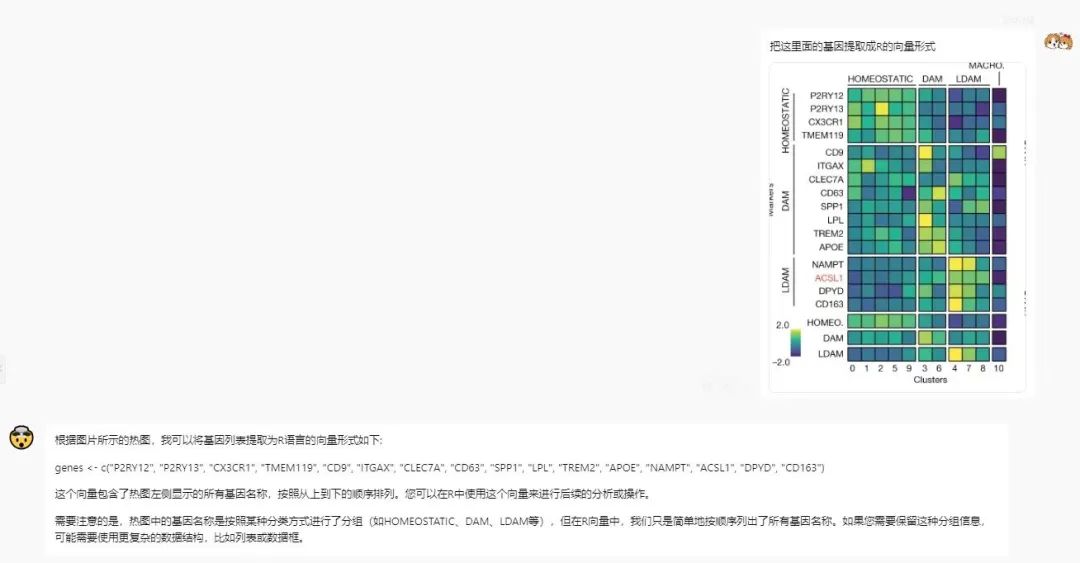
也可以从图片里面提取基因名字
之前 听说你还缺单细胞亚群标记基因 里面提到过OCR网页工具,实际上目前有了人工智能大模型,更方便了:(也可以从图片里面提取基因名字)
本文参与 腾讯云自媒体同步曝光计划,分享自微信公众号。
原始发表:2024-07-26,如有侵权请联系 cloudcommunity@tencent.com 删除
目录
腾讯云开发者

Copyright © 2013 - 2026 Tencent Cloud. All Rights Reserved. 腾讯云 版权所有
深圳市腾讯计算机系统有限公司 ICP备案/许可证号:粤B2-20090059  粤公网安备44030502008569号
腾讯云计算(北京)有限责任公司 京ICP证150476号 | 京ICP备11018762号